Their Story

April 26 marked one year since we lost Mom. To honor her memory, Dad had the idea of traveling back to where he and Mom met: Nassau, Bahamas. There they served as Baptist missionaries, Dad for two years, and Mom a few more. Growing up, my parents had spoken often of Nassau, so I was curious to finally see it myself.
It was my second time in the Bahamas. When I was eleven, we took a family trip to Spanish Wells, a small island a short boat ride from North Eleuthera, where some of my parents’ friends now live. We went deep-sea fishing on their boat and then sailed to a small uninhabited cay (pronounced “key”). The sands were snow white and the water clear as glass. Puzzled, I looked at my parents from behind my sunglasses and asked, “Why did you ever leave?”
My brother and I met Dad outside international arrivals. He was waiting for us in shorts and sandals. The air was warm, but breezy from the trade winds, and not as humid as I expected. We took West Bay Street most of the way to our rental downtown, two blocks from Junkanoo Beach. It was late afternoon, and we were to meet some old friends of his from First Baptist Church of Nassau. Despite the warm weather, he told us to wear pants. “If it’s like I remember, Bahamian Baptists are kind of weird about shorts,” he said.
We walked Esplanade Way by the bay, passing food shacks selling island staples, including conch salad, a favorite of Mom’s. Cars with the hatchback lifted and doors cracked were parked diagonally on the sand next to the road, playing reggae and rap from the stereo. A group of men, beer bottles in hand, sat on the porch of a wooden house-turned-bar and invited us to join them. We waved and politely declined.
We met up with the group from the church at a place called Oh Andros in a lively dining zone called Fish Fry. Dad was right about the pants. Rev. Dr. Diana Francis, the pastor of First Baptist, was among them. She carried herself like a leader who shouldered many responsibilities. She didn’t smile often, but when she did, it felt genuine, and her eyes were understanding. I ordered a side of plantains to go with my fish. When the waitress left, Dr. Francis looked at me and calmly corrected my American pronunciation. She stressed the first syllable and reduced the second (PLAN-tin)—the Bahamian way. She grinned.
The next day, Dad took us to the Baptist Community College. Mom worked in their media center, writing promotional materials and video scripts. She volunteered at the library in the evenings. Since she had a degree in accounting, she also closed out the books for her boss, Mickey, every year. Dad taught music theory, led chorales and a small handbell choir, and filled in playing trombone in the band when needed. He once directed an Easter musical called Celebrate Life. The group we had met for dinner the previous night brought it up, which he was surprised they still remembered.
Dad explained that he and Mom lived as neighbors at the college in a building that no longer stands. However, the banyan tree that occupied their shared backyard was still visible. There’s a photo of a similar tree in one of his albums that I’ve seen many times. He is sitting atop one of its long branches, surrounded by children from a Christmas choir that he directed. They are laughing. His blonde hair is thick. He looks young, skinny, and happy.


Dad spent two years on his journeyman mission in Nassau and then left for Fort Worth, Texas, to study at Southwestern Baptist Seminary. Mom departed five months later. She had to leave because her second work visa was never granted. She had waited over a year for it. Mickey sent her to Fort Worth. He said he needed her there for a library research assignment. Dad didn’t buy it for a second.
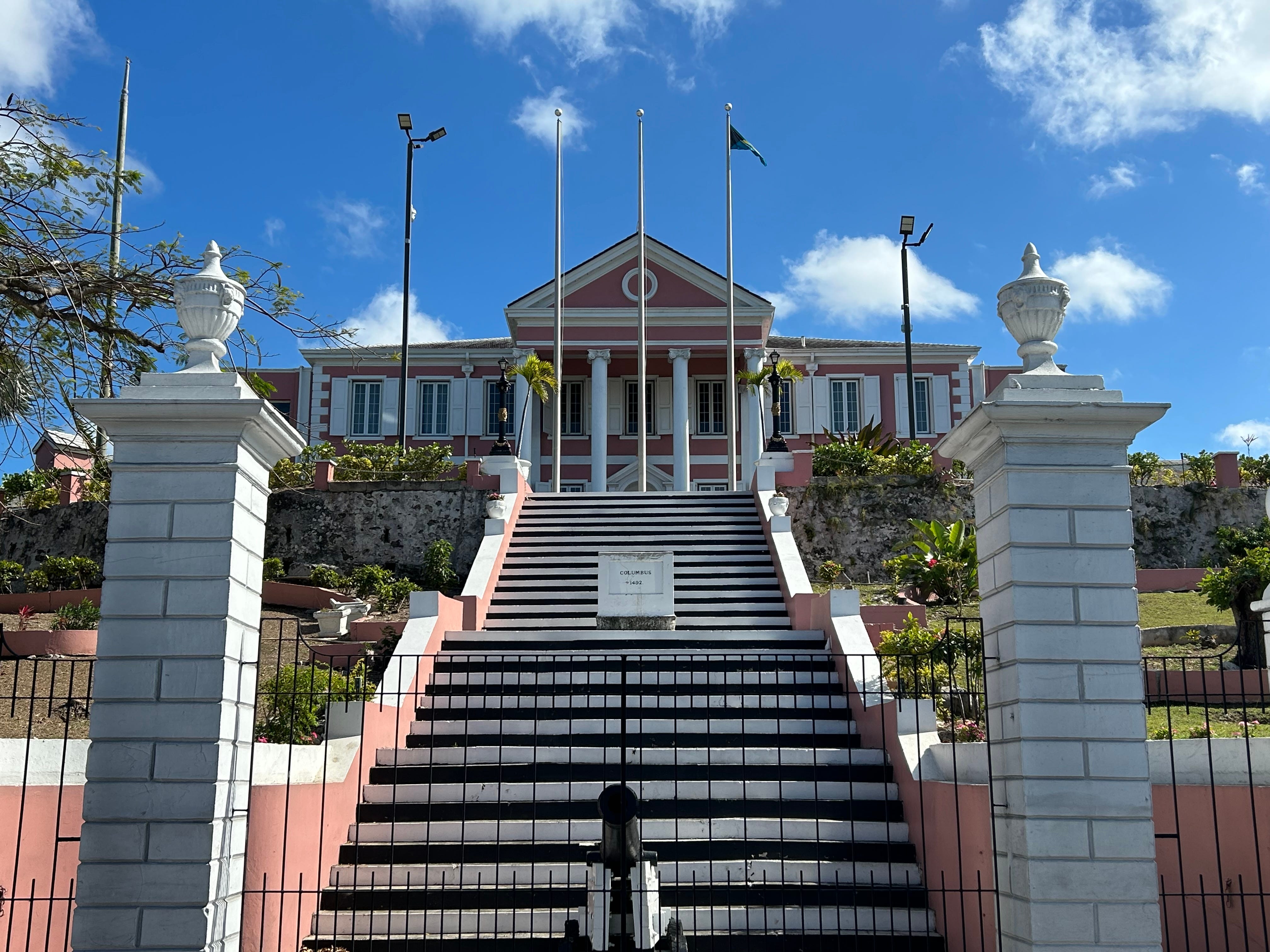
Officially, missionaries weren’t allowed to date one another, but in practice, things played out differently. The other missionaries in Nassau, including their supervisors, thought they made a fine pair and not-so-discreetly tried to nudge them together when they could. Queen Elizabeth visited the island in 1985 and held a reception on the lawn of the Governor’s Palace. Both Mom and Dad somehow secured invitations and attended together. Mom considered it their first date and was a little upset that Dad didn’t acknowledge it at the time.
They reunited in Fort Worth. Dad wasn’t working for the mission board anymore, so they were free to date openly. It was the Fall of 1986. They were engaged by next Spring.
Layford Cay is on the west side of the island. Mom liked to look for shells here in the tide pools in the rocks. I started down the beach by myself. I imagined her walking here decades before me, patiently scanning the surface of the rocks, turning over white, hardened coral and half shells, probably humming to herself. Sometimes she used the shells she found to make crafts. Others she collected in a jar. Dad still keeps them at the house.
I knew the 26th would be hard, and it was. But unlike at Mom’s memorial service, where we were still in shock and forced to say goodbye, this felt more like a farewell on our own terms. It was Sunday, so we attended First Baptist Church of Nassau. Rev. Dr. Diana Francis greeted us. Her father, Rev. Dr. Earl Francis (the Earl of Francis as they liked to call him), had been the pastor when Mom and Dad were here. A large picture of him hung on the wall in the foyer. He looked like a commanding figure.
The church printed a short eulogy of “Sister Janet” in their Sunday bulletin. Mom had actually attended Mt. Moriah Baptist Church when she lived here, not First Baptist. This was Dad’s church. But they honored her as one of their own all the same.
During the service, Dad was invited to speak at the podium. He said it had been forty years since he left Nassau and apologized for not returning sooner. He kept the focus of his speech on his old church, sharing memories of the late Rev. Dr. Earl Francis, who asked him to preach on the spot his first Sunday, and playing the piano in a suit and tie before the church had air conditioning. He didn’t refer to Mom much. I knew he wouldn’t have made it through if he had.
When Rev. Dr. Diana Francis preached, she made mention of her mother’s passing last June, only two months after Mom’s. “I thought you were going to have to scoop me off the floor,” she said. A lump formed in my throat and stayed with me through much of the service.
At the end, we were ushered to the foyer in the rear of the building. The congregation proceeded after us, and the room began to fill with laughter and chatter. I stood next to my brother, shaking people’s hands as they left and returning polite conversation. It felt like when we were kids, and Mom and Dad took us to visit churches in Eastern Europe, where they also served as missionaries, or across the Southeastern United States to give a report of their work. We were the children of the missionary guests, and we played our part well, hair parted and shirts tucked in, impressing grown-ups with our manners and memorized niceties. Standing there in the foyer, I put on the old identity that I hadn’t donned in a long time. It felt familiar, even a little comforting, to slip back into it. I looked over at my brother, and I’m almost sure he felt the same way.
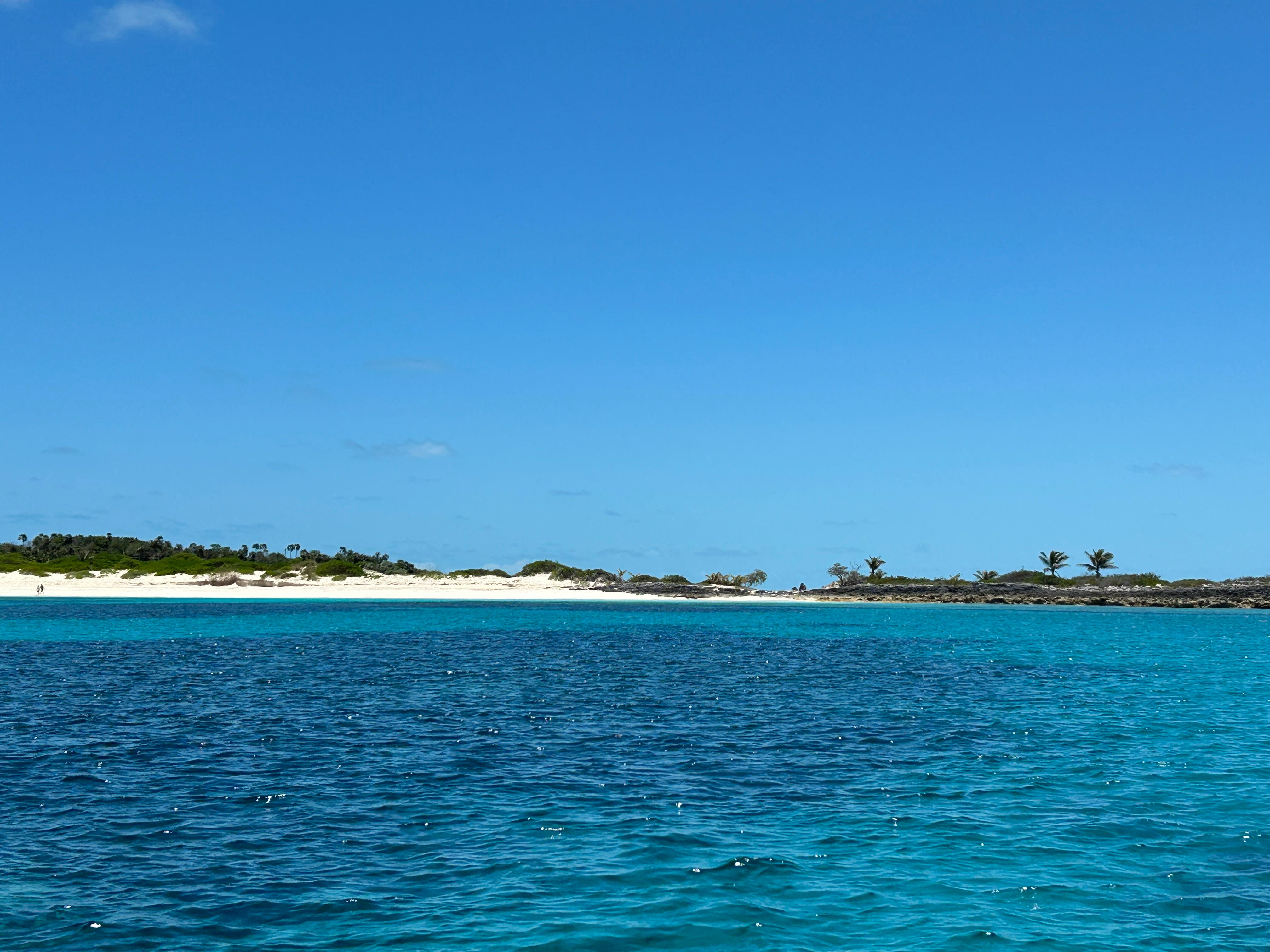
At 1:00 PM, we boarded a fishing boat with two motors. Dad carried Mom’s ashes aboard. The boat driver took us to Rose Island, another one of Mom’s favorite beaches. He killed the motors, and we idled a few hundred meters from shore. Between tears, Dad read a proverb that he said described Mom to a T. Then he said a prayer. We took turns shaking the urn over the starboard side of the boat. The white ashes sank into the blue waters.
We returned to the docks and had lunch at the Poop Deck, the restaurant where Dad was introduced to Mom for the very first time. I remember Mom making up limericks about the Poop Deck when I was little. Back then, I thought it was just a fictional name she had invented to amuse me. Dad requested a small table in the right corner of the deck that overlooked the harbor. It was the same table they had sat at those many years ago.
I imagine a warm evening, the sun setting, and the last of the boats returning from sea. Two women sit in plastic chairs waiting to place their order. My father arrives a few minutes later and walks toward them. The senior missionary stands. “Monte, this is Janet,” she says. My mother smiles and greets my father with a southern drawl. She is tall and skinny like him. The Bahamian humidity adds shape to her dark hair. It will begin to gray a decade later. Her bright smile and gentle eyes will remain the same for forty more years.
I’ve asked Dad to write down his memories of the Bahamas, and he’s promised he will. I look forward to reading them, as I’m sure he will be far more detailed and will include things I never knew about his and Mom’s story. Since her death, I feel a greater urgency to record family history and keep the memories alive.


Thanks for sharing this, Trey. Really glad you and your dad made that trip.